Security officers & drivers
Observe, protect, control, execute instructions and transmit facts.
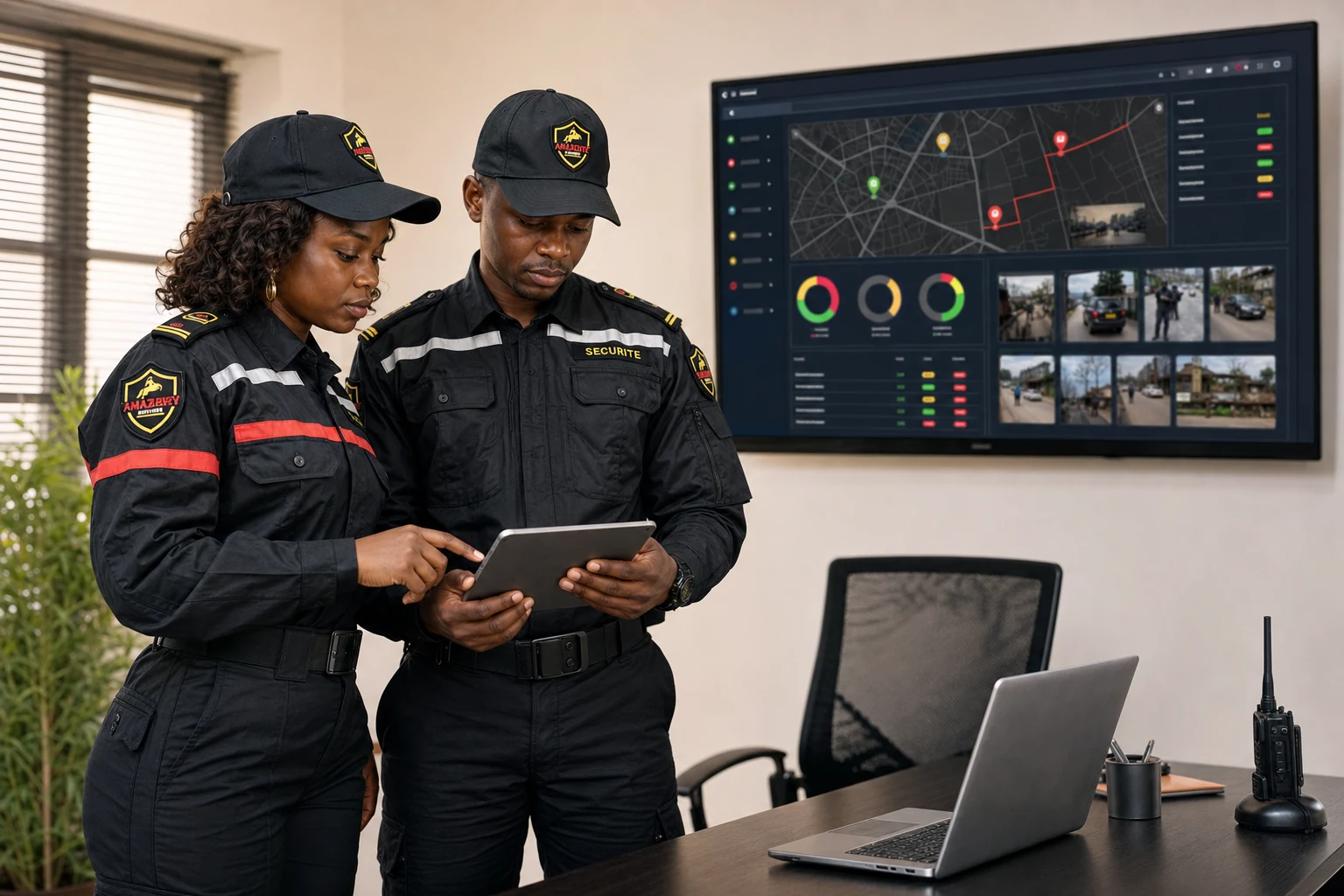
Supervision links officers, sector leaders, supervisors, command and client to maintain the expected service in the field.
An officer’s presence answers a staffing requirement. Supervision verifies actual service quality: attendance, punctuality, uniform standard, understanding of instructions, availability of resources, record quality, shift handovers and issue reporting.
AMAZONE monitors and coordinates operations 24/7 from its operations room. Supervisors remain in contact with command, security officers and client representatives to organise checks, corrective action and escalation.
The objective is simple: to detect deviations before they become a habit or an incident.
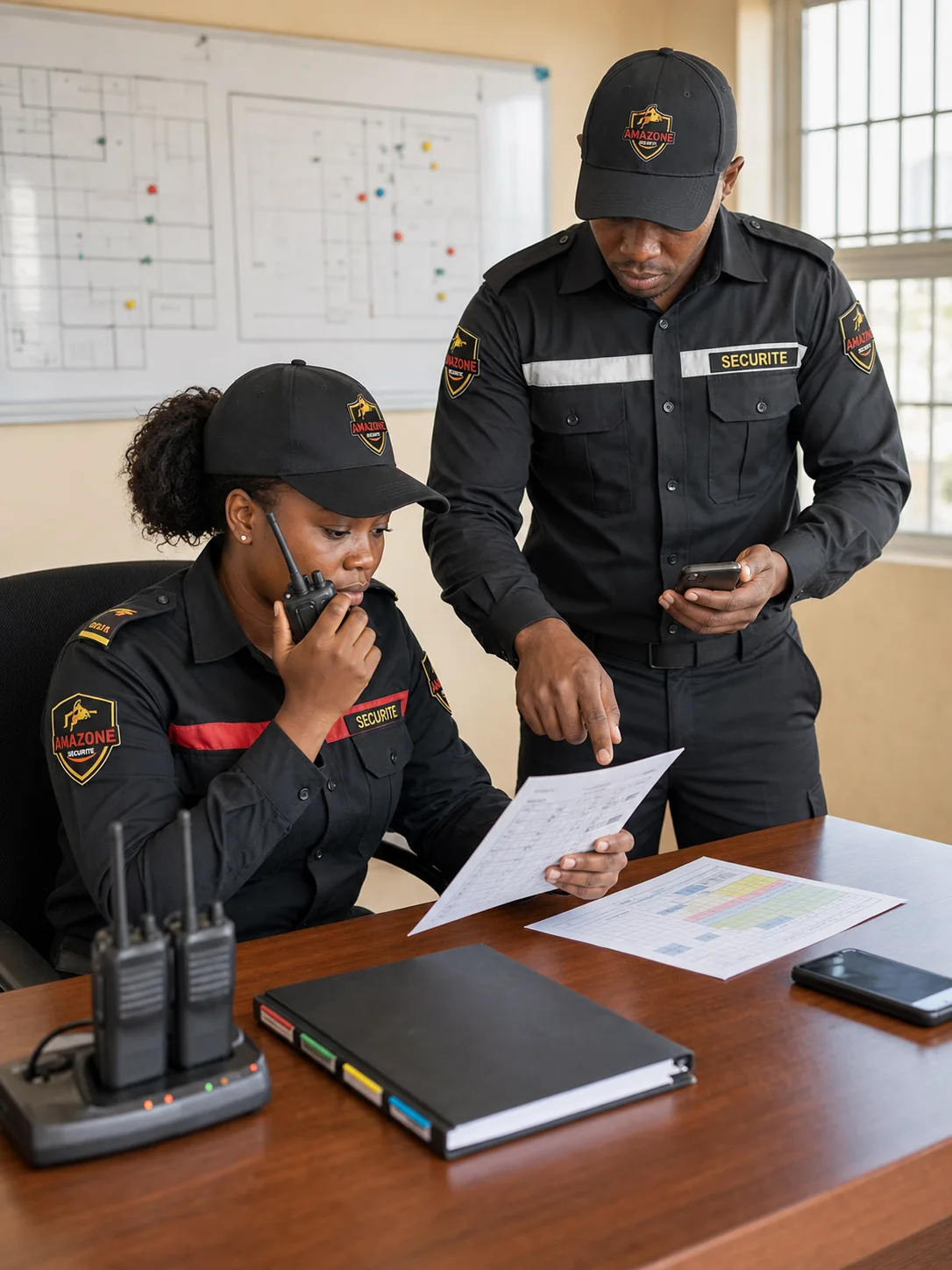
The chain ensures that every alert has an owner and every decision is taken at the appropriate level.
Observe, protect, control, execute instructions and transmit facts.
Rounds, proximity control, intervention in the area and client liaison.
Control of orders, visits, correction of deviations and liaison with the Operations Room.
Daily objectives, risk analysis, security plans, engagement and crisis management.
General organisation, means, operational arbitration and reporting to the Directorate-General.
The Operations Room receives, qualifies, transmits and monitors the information necessary for continuity of service.
Calls, radio traffic, messages, reports and updates from sites.
Nature, emergency, impact, person concerned and level of escalation.
Officer, Supervisor, Sector Head, Command, Client and Competent Services.
Request, incident, action, owner, due date and closure.
Shift handovers, replacements, resources and continuity of critical posts.
Notification, reporting, corrective action and follow-up review.
A useful alert must produce a decision, evidence and follow-up.
Observation, round, control, alarm, call or client information.
First permitted measures for people, access and assets.
Transmission to the right level with facts, location, urgency and need.
Engagement of the supervisor, command, client or competent services.
Chronology, people, decisions, available evidence and impacts.
Action, responsible, due date, verification and closure in the follow-up.
Supervisors organise visits so that each client is seen on their site during the week. Observations are linked to instructions, incidents and actions already open.

The format and thresholds are adapted to the contract, site, and risks.